
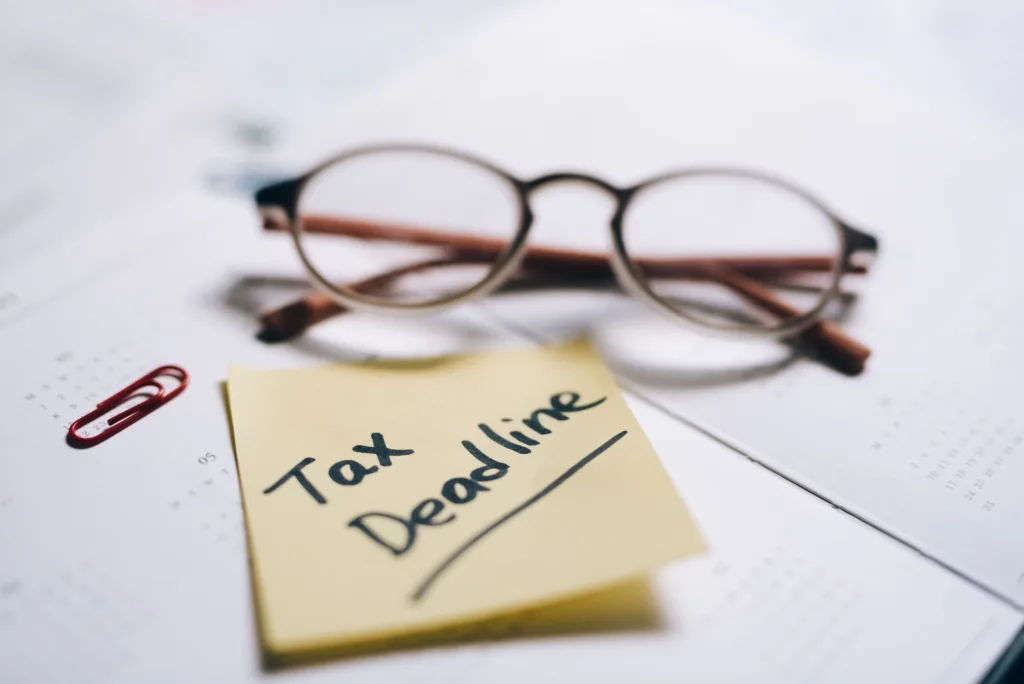
The Self Assessment deadline for the 2025/26 tax year is 31 January 2027. By that date, you must file your online tax return and pay any tax you owe to HMRC. If you miss it, HMRC charges an automatic £100 penalty, even if you have no tax to pay.
This guide sets out every key date, explains what you need to pay, and shows how to file on time. It is written for sole traders, landlords and higher earners in Slough and across Berkshire.
Self Assessment Deadline 2027: Key Dates at a Glance
| Date | What happens |
|---|---|
| 5 April 2026 | The 2025/26 tax year ended |
| 5 October 2026 | Deadline to register for Self Assessment if you are new to it |
| 31 October 2026 | Deadline for paper tax returns |
| 30 December 2026 | File online by this date to pay a bill under £3,000 through your tax code |
| 31 January 2027 | Online filing deadline, balancing payment for 2025/26 and first payment on account for 2026/27 |
| 31 July 2027 | Second payment on account for 2026/27 |
In 2027, 31 January falls on a Sunday. HMRC does not move the deadline, so you still need to file by midnight that day. However, if you pay by Bacs or CHAPS, make sure the money reaches HMRC by Friday 29 January 2027. Faster Payments and online card payments still clear over the weekend.
Who Needs to File a Self Assessment Tax Return?
You usually need to file a tax return for 2025/26 if any of these apply to you:
- You were a self-employed sole trader and earned more than £1,000 from your business
- You were a partner in a business partnership
- You received more than £1,000 in rental income from property
- You made a capital gain that you have not already reported and paid
- You received untaxed income, such as tips or commission, over £2,500
- You received foreign income that you need to declare
- You or your partner owe the High Income Child Benefit Charge and you have not set it up through your tax code
- HMRC sent you a notice to file a return
If you started trading last year, you first need to register as self-employed and get your UTR number. HMRC posts your UTR within about 15 days, so act now if you missed the 5 October registration deadline.
What Do You Have to Pay by 31 January 2027?
On 31 January 2027, you may need to make two payments:
- The balancing payment for 2025/26. This is the tax you still owe for the year after any payments on account you already made.
- Your first payment on account for 2026/27. HMRC asks for this if your last tax bill was more than £1,000 and less than 80% of your tax was collected at source. Each payment on account equals half of last year’s bill.
The second payment on account then falls due on 31 July 2027. Many people are surprised the first time they see both payments together, so check your figures early. Our guide to payments on account explains how HMRC works these out and when you can ask to reduce them.
Self Assessment Late Filing Penalties
HMRC charges penalties as soon as your return is late, and they grow the longer you wait:
| How late | Penalty |
|---|---|
| 1 day late | £100 fixed penalty |
| 3 months late (from 1 May 2027) | £10 a day for up to 90 days, so up to £900 |
| 6 months late (after 31 July 2027) | 5% of the tax due or £300, whichever is higher |
| 12 months late (after 31 January 2028) | A further 5% of the tax due or £300, whichever is higher |
Paying late adds more costs. HMRC charges a 5% penalty on tax still unpaid 30 days after the deadline, then another 5% at six months and again at 12 months. On top of that, HMRC charges interest on late payments at the Bank of England base rate plus 4%.
In other words, a return filed three months late can cost you over £1,000 in penalties before HMRC adds any interest.
How to File Your Tax Return Before the Deadline
Follow these steps to file on time:
- Sign in to HMRC online. Use your Government Gateway user ID. If you have never filed online, set up your account now, because HMRC posts an activation code that can take up to 10 days to arrive.
- Gather your records. Collect your P60 or P45, bank interest, rental income and expenses, and your business income and expenses for 6 April 2025 to 5 April 2026.
- Complete the right pages. Sole traders complete the SA103 self-employment pages, and landlords complete the property pages.
- Check your calculation. HMRC shows your tax bill before you submit. Check that your payments on account and any reliefs look right.
- Submit and save your proof. Keep your submission receipt. You can later download your tax calculation, often called an SA302, for a mortgage or loan application.
- Pay your bill. Pay online through your HMRC account, by bank transfer or by card, and leave time for the payment to clear.
For full official details, see HMRC’s Self Assessment guidance.
Can’t Pay Your Tax Bill in Full?
File your return on time even if you cannot pay. Filing on time avoids the £100 penalty, and HMRC treats late filing more harshly than late payment.
You can then set up a Time to Pay arrangement online if you owe £30,000 or less, you have filed your 2025/26 return, and you apply within 60 days of the deadline. This spreads your bill over monthly instalments, although HMRC still charges interest.
Self Assessment Tips for Higher Earners
If your income went over £100,000, you start to lose your Personal Allowance. This creates an effective tax rate of 60% on part of your income. Read our guide to the £100k tax trap to see how pension contributions and Gift Aid can bring your taxable income back down. Claim these in your return to cut your bill.
Get Your Tax Return Filed by a Slough Accountant
Direct Assist Accountants is an ACCA-regulated practice based in Slough. Our team prepares and files Self Assessment tax returns for sole traders, landlords, company directors and higher earners across Slough, Windsor, Maidenhead and Berkshire.
We check your income and expenses, claim every relief you qualify for and submit your return well before 31 January. As a result, you avoid the last-minute rush and the penalties that come with it.
Book our Self Assessment tax return service today and leave the deadline to us.
Frequently Asked Questions
What is the Self Assessment deadline for 2025/26?
The online deadline is 31 January 2027. You must also pay any tax you owe for 2025/26 by the same date. The paper return deadline was 31 October 2026.
What happens if I miss the 31 January deadline?
HMRC charges an automatic £100 penalty the day after the deadline. If your return is still missing after three months, daily penalties of £10 start, and further penalties follow at six and 12 months.
Does the deadline change because 31 January 2027 is a Sunday?
No. You still need to file by midnight on Sunday 31 January 2027. If you pay by Bacs or CHAPS, make sure the money reaches HMRC by Friday 29 January 2027.
Can I appeal a late filing penalty?
Yes, if you have a reasonable excuse, such as a serious illness, a bereavement or an HMRC system failure. You must file the return first and then appeal within 30 days of the penalty notice.
Do I need to file if I have no tax to pay?
Yes, if HMRC asked you to file a return. HMRC still charges the £100 penalty for a late return even when you owe nothing. If you no longer need to file, ask HMRC to cancel the return before the deadline.
How early can I file my tax return?
You can file your 2025/26 return any time after 6 April 2026. Filing early gives you more time to plan and pay, and it lets you pay a bill under £3,000 through your tax code if you file by 30 December 2026.