
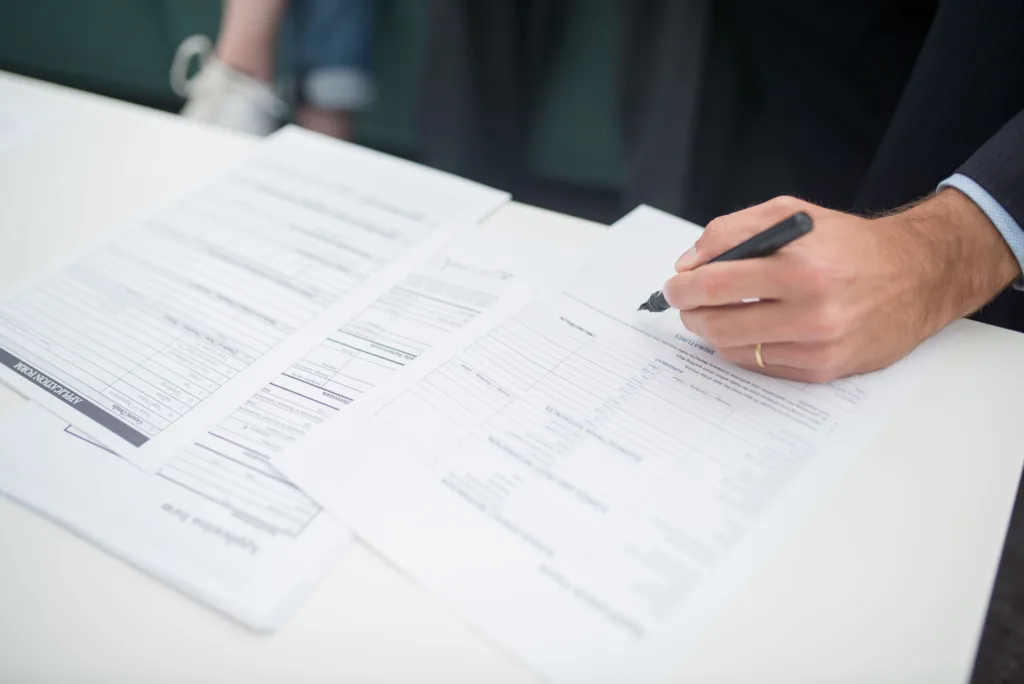
A sole trader must register as self-employed with HMRC once their business income goes over £1,000 in a tax year. Registration sets up your Self Assessment record, gives you a Unique Taxpayer Reference (UTR) and lets you file tax returns.
You must register by 5 October after the end of the tax year in which you started trading. This guide explains who needs to register, what you need, how the process works and what to do next.
Do You Need to Register as Self-Employed?
You need to register if you earned more than £1,000 from self-employment in a tax year. This £1,000 is the trading allowance. It covers your total income from selling goods or services, before you take off any expenses.
You also need to register if:
- You want to pay voluntary Class 2 National Insurance to protect your State Pension
- You need to prove your self-employed income, for example for a mortgage or Tax-Free Childcare
You can be employed and self-employed at the same time. Your job’s PAYE does not cover your side business, so you still need to register for it.
If you are setting up a business partnership, the process is different. Each partner registers individually, and the partnership registers separately.
When Is the Deadline to Register?
The deadline is 5 October after the end of the tax year in which you started. The UK tax year runs from 6 April to 5 April.
| You started trading | Tax year | Register by |
|---|---|---|
| 1 May 2026 | 2026/27 | 5 October 2027 |
| 1 February 2027 | 2026/27 | 5 October 2027 |
| 1 June 2027 | 2027/28 | 5 October 2028 |
Do not wait for the deadline. Registering early gives you time to get your UTR and set up your online account before your first return is due on 31 January.
What Happens If You Register Late?
HMRC may charge a “failure to notify” penalty if you register late and owe tax. The penalty is a percentage of the tax you owe. It is higher if HMRC thinks you hid your income on purpose.
If you register late but owe no tax, you usually face no penalty. Still, it is best to register on time to avoid problems.
What Do You Need to Register?
Have these details ready before you start:
- Your full name, date of birth and home address
- Your National Insurance number
- Your phone number and email address
- The date you started self-employment
- A short description of your business (for example, “plumber” or “freelance web designer”)
- Your business address, if it is different from your home
- Your UTR, if you have filed a Self Assessment return before
You also need a Government Gateway user ID. If you do not have one, you can create it during registration.
How to Register as Self-Employed: Step by Step
- Go to the HMRC registration page. Use the official register for Self Assessment page on GOV.UK. Choose the option for self-employed sole traders.
- Sign in or create a Government Gateway account. Keep your user ID and password safe, because you will need them for every tax return.
- Enter your personal and business details. Check your National Insurance number and start date carefully.
- Submit your registration. HMRC confirms that it has received your details.
- Wait for your UTR. HMRC sends your 10-digit UTR by post, usually within 15 working days. It may also appear in your Personal Tax Account or the HMRC app.
- Activate your online account. HMRC posts an activation code for Self Assessment online. Use it within 28 days, or you will need to request a new one.
For more on your tax reference, read our guide on how to get a UTR number.
What to Do After You Register
Registering is only the first step. Once you are set up, you need to:
- Keep records of your income and expenses. Save invoices, receipts and bank statements for at least five years after the 31 January filing deadline.
- Open a separate business bank account. It is not required for sole traders, but it makes your records much easier.
- File your tax return by 31 January. For example, the 2026/27 return is due online by 31 January 2028.
- Pay your tax bill on time. You pay Income Tax and Class 4 National Insurance on your profits, also by 31 January.
- Plan for payments on account. If your bill is over £1,000, HMRC usually asks for advance payments towards next year. Read our guide to payments on account.
Making Tax Digital for Sole Traders
Making Tax Digital (MTD) for Income Tax started in April 2026. It applies to sole traders and landlords whose qualifying income is over £50,000. The threshold falls to £30,000 from April 2027 and £20,000 from April 2028.
If MTD applies to you, you must keep digital records and send quarterly updates to HMRC through approved software. Read our full guide to Making Tax Digital for Income Tax.
Do You Also Need to Register for VAT?
Most new sole traders do not need to register for VAT straight away. You must register once your VAT-taxable turnover goes over £90,000 in any rolling 12-month period.
You can register voluntarily below this level. This can help if your customers are VAT-registered businesses. Our VAT services can help you decide.
Sole Trader or Limited Company?
Registering as self-employed is the simplest way to start a business. But as your profits grow, a limited company may save you tax. A company also keeps your personal assets separate from business debts.
Many people start as a sole trader and switch later. If you are unsure, our guide to limited company accounting explains the differences.
Frequently Asked Questions
How long does it take to register as self-employed?
The online form takes about 15 minutes. Your UTR usually arrives by post within 15 working days.
Is it free to register as self-employed?
Yes. Registering with HMRC is completely free. Be careful of websites that charge a fee to “register” you.
Can I register as self-employed if I already have a job?
Yes. Many people run a business alongside their job. Your employer still taxes your salary through PAYE, and you report your business income on a Self Assessment return.
Do I need to register if I earn less than £1,000?
No. The £1,000 trading allowance covers your income, so you do not need to register. But you may choose to register if you want to pay voluntary National Insurance.
What if I stop being self-employed?
Tell HMRC as soon as you stop trading. You still need to file a tax return for the year you stopped.
Get Help Setting Up as Self-Employed
Starting a business is exciting, but the tax side can feel confusing. Our ACCA-regulated team registers you with HMRC, sets up your record-keeping and files your tax returns on time.
Find out more about our accounting services for sole traders, or call 020 3633 2018 to speak to our accountants in Slough.