Most food in the UK carries 0% VAT, known as zero-rating. However, several types of food and drink carry the standard rate of 20%, including hot takeaway food, meals eaten on the premises, confectionery, crisps and soft drinks.
The rules can feel inconsistent. For example, a cold sandwich can carry 0% VAT, while the same sandwich toasted carries 20%. This guide explains how VAT on food works and what it means for your business.
VAT Rates on Food at a Glance
| Item | VAT rate |
|---|---|
| Basic groceries: bread, milk, meat, fish, fruit, vegetables | 0% |
| Cakes and plain biscuits | 0% |
| Cold takeaway food, such as sandwiches and salads | 0% |
| Hot takeaway food, such as chips, burgers and pizza | 20% |
| Food eaten on the premises: restaurants, cafés, pubs | 20% |
| Hot drinks: takeaway tea and coffee | 20% |
| Chocolate-covered biscuits | 20% |
| Sweets, chocolate and confectionery | 20% |
| Crisps and savoury snacks | 20% |
| Ice cream and frozen desserts | 20% |
| Soft drinks, juices and bottled water | 20% |
| Alcohol | 20% |
Why Is Most Food Zero-Rated?
UK law treats food as an essential, so most food for human consumption carries 0% VAT. As a result, supermarkets do not add VAT to everyday items like bread, eggs or vegetables.
However, the law lists exceptions. These are items it sees as luxuries or treats, plus food supplied as part of a service. In these cases, VAT applies at 20%.
When Is Food Standard-Rated?
1. Catering and Eating In
Any food or drink eaten on your premises carries 20% VAT. This covers restaurants, cafés, pubs and canteens, and any area with tables and chairs for customers.
For example, a sandwich sold to take away can carry 0% VAT, but the same sandwich eaten at a table in your café carries 20%.
2. Hot Takeaway Food
Takeaway food carries 20% VAT if you:
- Heat it so the customer can eat it hot, above room temperature
- Keep it hot after cooking, for example under a heat lamp
- Sell it in packaging that keeps it hot
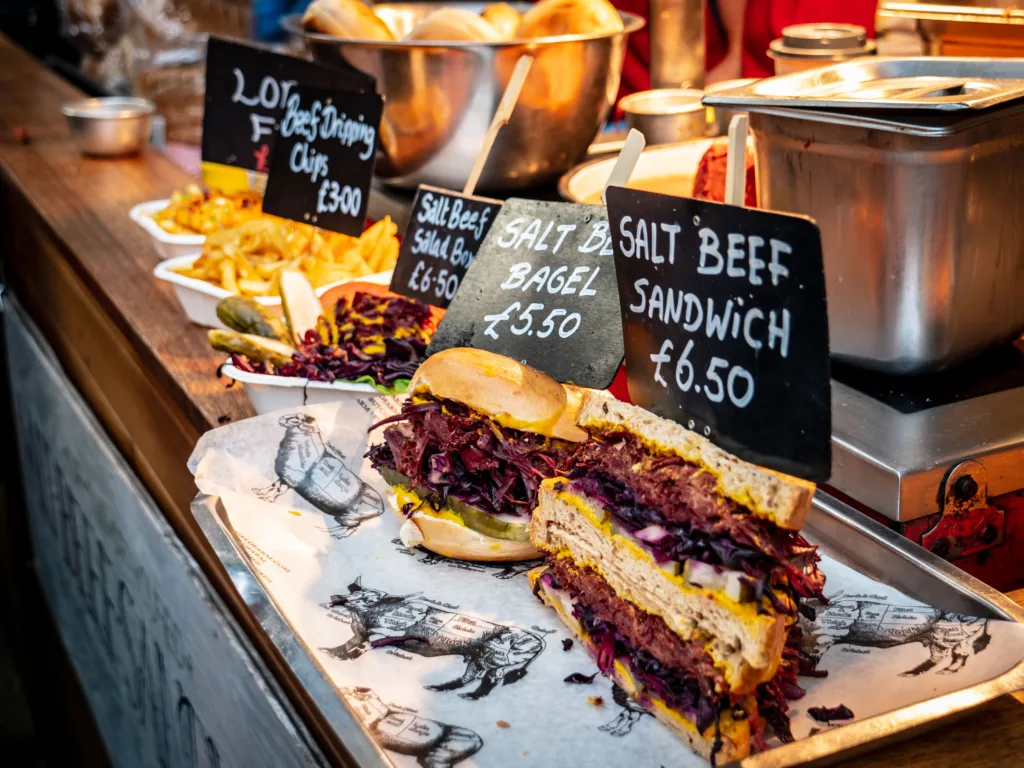
That is why fish and chips, burgers, pizza and hot pies from a takeaway carry 20% VAT. In contrast, a cold pasty carries 0% VAT, while a hot one carries 20%.
3. Hot Drinks
Takeaway hot drinks, such as tea, coffee and hot chocolate, carry 20% VAT. On the other hand, tea bags and coffee beans you buy to take home carry 0%.
4. Confectionery and Snacks
These items carry 20% VAT, even when a shop sells them:
- Sweets, chocolate bars and chewing gum
- Biscuits covered in chocolate
- Crisps, roasted nuts and savoury snacks
- Ice cream, ice lollies and frozen yoghurt
Cakes are an exception. Even chocolate cakes carry 0% VAT, because the law treats cakes as a staple food rather than a treat.
5. Drinks
Most drinks carry 20% VAT, including soft drinks, fruit juice, bottled water and alcohol. In contrast, milk and most milk-based drinks carry 0%.
Cake or Biscuit? Examples That Catch People Out
| Item | VAT rate | Why |
|---|---|---|
| Plain digestive biscuit | 0% | Plain biscuits carry 0% VAT |
| Chocolate digestive | 20% | Fully or partly covered in chocolate |
| Jaffa Cake | 0% | HMRC treats it as a cake, not a biscuit |
| Chocolate cake | 0% | Cakes carry 0% VAT |
| Gingerbread man with chocolate eyes | 0% | Small chocolate decoration only |
| Flapjack | 0% | HMRC treats it like a cake |
| Cereal bar | 20% | HMRC usually treats it as confectionery |
What This Means for Food Businesses
If you run a restaurant, takeaway, café or food stall in Slough, you need to apply the right VAT rate to every item. Common problems include:
- Mixing eat-in and takeaway sales: you must record which customers eat on the premises.
- Meal deals: if a deal mixes 0% and 20% items, you need to split the price fairly.
- Temperature errors: charging 0% on hot food is one of the most common mistakes HMRC finds.
- Till settings: your EPOS system must apply the right rate to each product.
Do You Need to Register for VAT?
You must register for VAT once your VAT-taxable turnover goes over £90,000 in any rolling 12-month period. Zero-rated sales still count towards this threshold.
Many food businesses with mostly zero-rated sales choose to register voluntarily, because they can then reclaim the VAT on their costs.
Is the Flat Rate Scheme Worth It?
The VAT Flat Rate Scheme lets smaller businesses pay a fixed percentage of their turnover instead of working out VAT on every sale. The rate depends on your business type. For example, restaurants and takeaways use a different rate to food retailers.
The scheme can save time. However, it does not suit every food business, especially those with lots of zero-rated sales. Our VAT accountants in Slough can compare the schemes for you.
VAT on Food for Your Own Staff
The rules above cover food you sell. However, when your business buys food for staff, different rules apply to reclaiming the VAT. Read our guide to VAT on staff meals and subsistence.
You can read HMRC’s full rules in VAT Notice 701/14 on food products.
Frequently Asked Questions
Is there VAT on food in the UK?
Most food carries 0% VAT. However, hot takeaway food, food eaten on the premises, confectionery, crisps, ice cream, soft drinks and alcohol carry 20%.
Is there VAT on takeaway food?
It depends on the temperature. Cold takeaway food usually carries 0% VAT. Hot takeaway food, on the other hand, carries 20%.
Is there VAT on sandwiches?
Cold sandwiches sold to take away carry 0% VAT. However, a sandwich eaten on the premises, or a hot toasted sandwich, carries 20%.
Is there VAT on coffee?
Coffee beans and instant coffee for home use carry 0% VAT. However, a takeaway or eat-in coffee from a café carries 20%.
Is there VAT on cakes?
No. Cakes carry 0% VAT, including chocolate cakes. However, chocolate-covered biscuits carry 20%.
Do zero-rated sales count towards the VAT threshold?
Yes. Zero-rated sales count towards the £90,000 VAT registration threshold, even though you charge no VAT on them.
Get Help With VAT for Your Food Business
VAT on food is full of grey areas, and mistakes can lead to HMRC assessments and penalties. Our ACCA-regulated team helps restaurants, takeaways, cafés and food retailers across Slough and Berkshire set up their tills, choose the right VAT scheme and file accurate returns.
Find out more about our VAT services and bookkeeping, or call 020 3633 2018 to speak to our accountants in Slough.